Most people pick one corner of Mexico and stick to it. Los Cabos is known for its luxury resorts. Oaxaca shines with its food and mezcal. Tulum draws visitors with its ancient ruins and Caribbean beaches. Combine all three in a single trip, and you get 10 days that span desert coastlines, highland indigenous markets, and turquoise cenotes – about as varied as one country can get.
The catch is the routing. These three destinations sit in completely different parts of Mexico, and getting between them on commercial carriers almost always sends you through Mexico City. Done twice, those connections can burn a full day each way. This itinerary is built around avoiding that – keeping the trip moving without the wasted time.
Getting Between the Destinations
Before diving into the day-by-day, it’s worth understanding the logistics upfront, since they shape how the whole trip flows.
There are no direct commercial flights linking Los Cabos (SJD), Oaxaca (OAX), and Cancun (CUN) to each other. The standard routing funnels everyone through Mexico City’s Benito Juárez airport, which can add three to five hours per leg when you factor in connection times and terminal transfers.
One approach that sidesteps this hassle entirely is chartering a direct flight between cities. For a group, the cost per seat often comes closer to a business class commercial fare than most people expect – and you skip the connection entirely. Jet Finder lets you compare charter options across operators for routes like these, which is useful when the commercial schedule doesn’t work in your favor.
For entry requirements and health documentation – including any vaccination recommendations that apply to different regions of Mexico – the CDC’s Mexico travel page is the most reliable reference to check before booking.
If you’re sticking with commercial carriers, here’s the most time-efficient routing:
|
Leg |
Route |
Notes |
|
Day 1 |
Fly into SJD (Los Cabos) |
Direct flights available from most US hubs |
|
Day 4 |
SJD – MEX – OAX |
Book a morning departure to arrive by early afternoon |
|
Day 7 |
OAX – MEX – CUN |
Early departure; drive south to Tulum on arrival |
It works – it’s just slower.
Days 1-3: Los Cabos
Los Cabos covers two towns – Cabo San Lucas and San José del Cabo – connected by a 32-kilometer stretch of coastline called the Corridor. The two are very different. Cabo San Lucas is louder, more resort-heavy, and built for nightlife and water sports. San José del Cabo is quieter, more colonial, with an art district, a central plaza, and a calmer overall feel. Both are worth your time.
Day 1: Arrive and Land’s End
Check in, get your bearings, and if you arrive early enough, take a water taxi out to El Arco. The rock arch at Land’s End sits where the Pacific meets the Sea of Cortez – it’s the most photographed spot in Baja and one of the few landmarks in Mexico that actually delivers in person. Take the boat around to Lover’s Beach for a swim if the conditions are calm. The evening is straightforward: cold Pacificos, fresh fish tacos, somewhere along the marina.
Day 2: The Corridor and Water
The stretch of beach between the two towns is where most of the activity happens. A few key spots worth knowing:
- Medano Beach – The primary beach for swimming in Cabo San Lucas, sheltered from Pacific swells. This beach is perfect for unwinding and engaging in various water activities.
- Chileno Bay – A quieter spot with calm waters, perfect for exploring marine life right from the shore.
- Santa Maria Bay – A protected cove with crystal-clear waters and the fewest visitors of the three.
- Whale watching – If you’re here between December and April, book a morning trip before the wind picks up. Humpbacks and gray whales use the Sea of Cortez as a calving ground, and the sightings are consistently good.
Day 3: San José del Cabo
Spend the morning walking San José’s historic center. The town has an active gallery district centred around Obregón Street that’s worth an hour or two, especially if you arrive before the heat builds. The local market on Calle Doblado is good for breakfast – look for machaca con huevos (shredded beef with eggs) rather than the tourist-facing places on the main plaza. Afternoon is a quiet time at the hotel. You have a travel day tomorrow.
Days 4-6: Oaxaca
Oaxaca City sits at 1,500 meters in a valley between the Sierra Norte and Sierra Sur mountains. The altitude keeps the climate mild year-round and gives the city a completely different feel from coastal Mexico – terracotta and green stone, baroque churches, and the smell of copal and chocolate in the air. It’s also one of the best eating and drinking cities in the country.
Day 4: Arrive and the Zócalo
After arriving, give yourself the afternoon to walk. The zócalo (central plaza) is the social center of the city – cafés with tables under the arches, marimba bands, and a steady flow of activity from morning until late. The surrounding blocks are dense with things worth seeing: the Santo Domingo church and its attached cultural museum, the ethnobotanical garden behind it, and the textile shops along García Vigil.
For dinner, try tlayudas – large crispy tortillas topped with black beans, asiento (unrefined pork fat), Oaxacan cheese, and your choice of protein. They’re filling, cheap, and a better introduction to the food here than anything with a tasting menu format.
Day 5: Monte Albán
This is the day everyone plans, and nobody regrets. Monte Albán is a pre-Columbian Zapotec city built on a flattened hilltop overlooking the Oaxaca Valley – designated a UNESCO World Heritage Site alongside the historic center of the city. The site dates back to around 500 BCE and was occupied for over a thousand years. Arrive at opening time, 8 a.m., to explore before the tour buses arrive. Allow two to three hours to visit the main plaza, the observatory, and the ball court.
The afternoon is best spent in the covered market. Mercado Benito Juárez and the adjacent Mercado 20 de Noviembre are both good for lunch – the meat corridor in 20 de Noviembre is the famous one, where vendors grill chapulines (grasshoppers), chorizo, and various cuts of beef over charcoal. The evening is for mezcal. Oaxaca produces around 80% of Mexico’s mezcal, and there are enough small tasting bars in the city center to make a proper evening of it.
Day 6: Day Trip Outside the City
Two solid options here, depending on your energy level:
- Hierve el Agua – Petrified waterfall formations about 70 kilometers from the city, with calcium-saturated cliff-edge pools looking out over the valley. The views are serious, and the swimming is good. You’ll need a tour or rental car; the road gets rough in the final stretch.
- Teotitlan del Valle – A Zapotec weaving village 30 kilometers out, where most families still work hand-operated looms using natural dyes. While Hierve el Agua offers a gentler alternative, the quality of work in the family workshops significantly exceeds that of city shops.
Days 7-10: Tulum
The flight from Oaxaca to Cancun connects through Mexico City. Book an early departure to arrive in Cancun by early afternoon, then drive south on the 307 highway. The drive to Tulum takes about 90 minutes from the airport in normal traffic.
Day 7: Arrive and Settle In
Tulum splits into two distinct zones: the beach (Zona Hotelera) and the town (Tulum Pueblo), about three kilometers inland. The beach hotels are boutique and expensive, and they are right in the Caribbean. The town has more affordable options, better restaurants, and a faster-growing local food scene. Most visitors stay on the beach and eat in town, which is the right call.
Day 8: Ruins at Sunrise and Cenotes
The Tulum archaeological zone sits on a cliff above the Caribbean – the only major Mayan walled city on the coast. Arrive at opening time (8 am) before the buses pull in from Cancun and Playa del Carmen. The site is smaller than Chichén Itzá, but the setting is exceptional. Budget about 90 minutes.
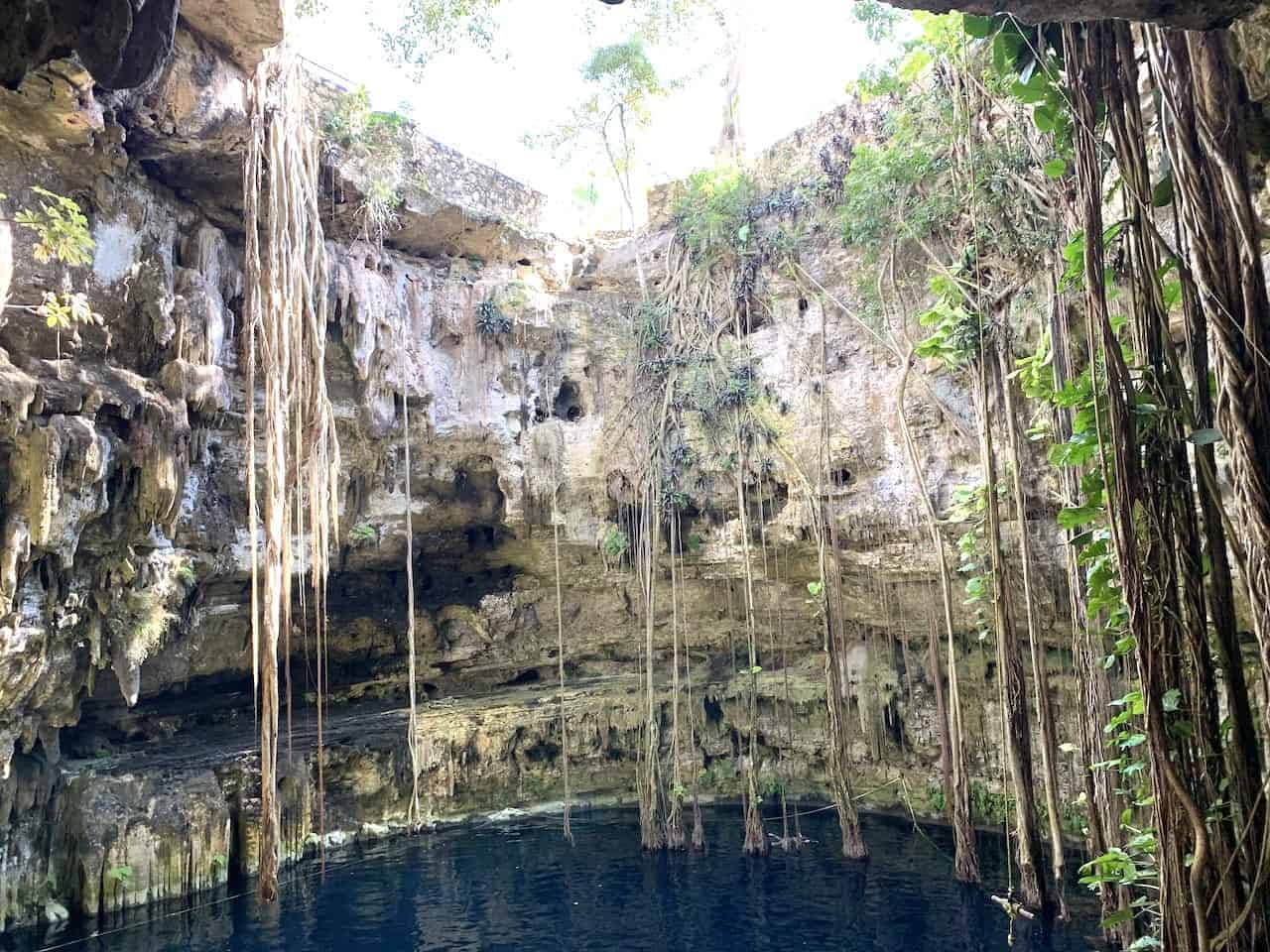
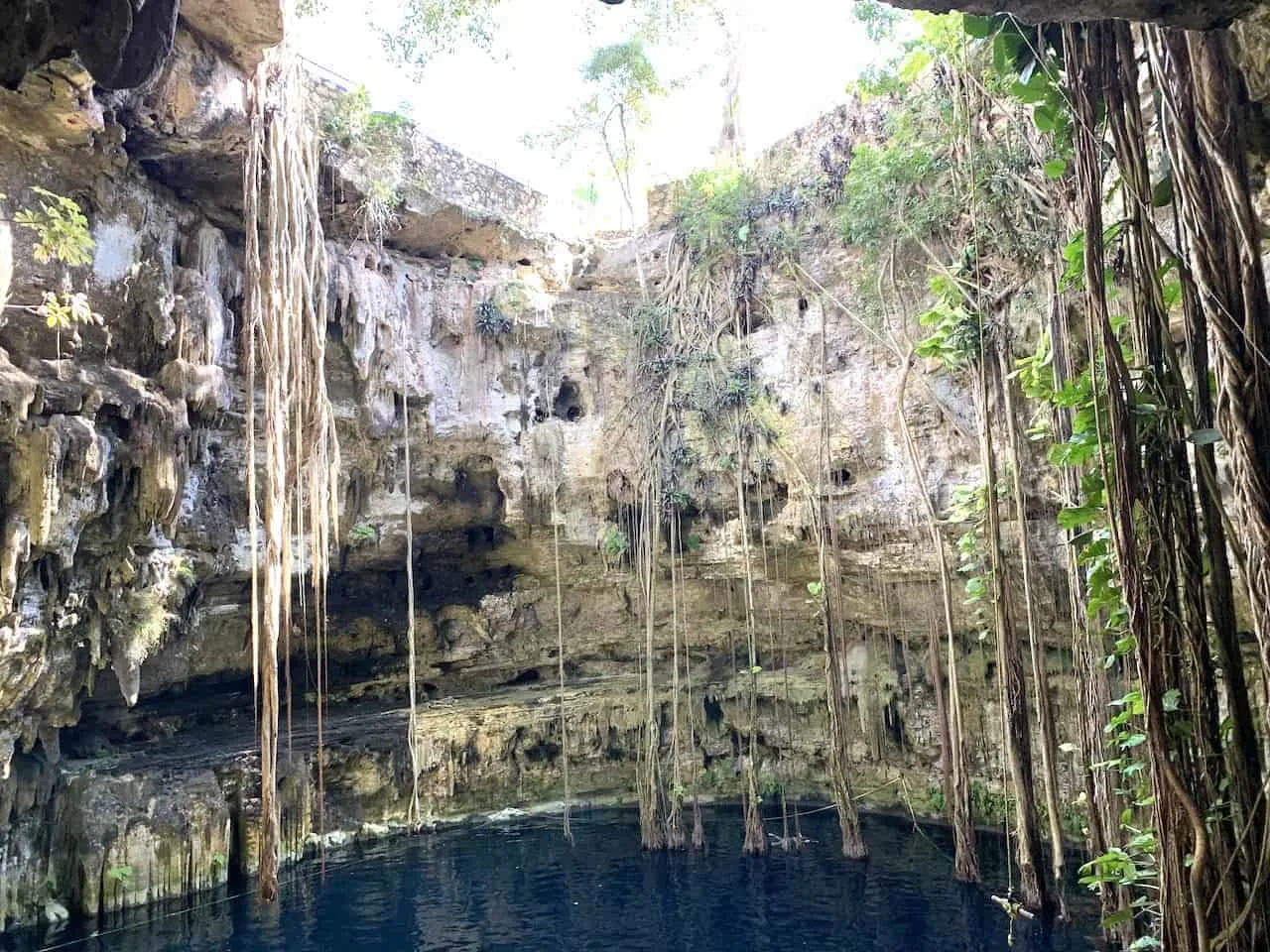
The afternoon is for cenotes. The Yucatan Peninsula has thousands of them – underground freshwater sinkholes connected by an enormous subterranean river system. Gran Cenote is the closest to Tulum and the most visited, but worth it. Dos Ojos, about 15 kilometers south, is larger and better for snorkeling if you want to see more of the cave system.
Day 9: Sian Ka’an or Cobá
Two very different days available here:
- Sian Ka’an – A protected biosphere reserve stretching south of Tulum along the coast, administered by Mexico’s national parks authority. Tours typically include a boat trip through the lagoon channels, snorkeling, and time on a remote beach. At around 1.3 million acres, it sees considerably fewer visitors than the archaeological sites – a good counterbalance to the busier days.
- Cobá – A large Classic Maya site in the jungle about 40 kilometers northwest of Tulum. The main pyramid (Nohoch Mul) is one of the tallest in Mexico, and climbing is still permitted here, unlike at Chichén Itzá. The jungle setting alone is worth the drive.
Day 10: Departure
After a morning swim and a leisurely breakfast, head north to the Cancun airport. The drive takes 90 minutes minimum – allow about two full hours, given traffic near Playa del Carmen.
When to Go
The best time to cover all three destinations is November through February. All three destinations have moderate temperatures: Los Cabos and Tulum are warm but not oppressive, while Oaxaca’s highland evenings cool down enough to require a light jacket. Hurricane season (June-October) affects the Yucatan coast significantly and can disrupt the Tulum portion of the trip.
March and April work well too, but Semana Santa (the week before Easter) brings heavy domestic travel that affects availability and prices throughout Mexico. Book well ahead if you’re travelling in that window.
Before You Go
A few practical notes for a trip this spread out:
- Travel tips – The TripTins travel tips page covers fundamentals worth revisiting before any multi-destination trip, including phone and SIM card setup, carry-on strategy, and offline map prep.
- Packing – This trip spans beach resort days, upland city walking, and optional hiking. The around the world packing list is a useful reference for keeping the bag light across varied climates without overpacking for any one environment.
- Connectivity – Mexico’s eSIM options have improved considerably. Telcel and AT&T Mexico both have solid coverage across all three destinations. Grab a local SIM or activate an eSIM at the airport.
- Currency – ATMs are reliable in all three cities. Avoid airport exchange counters – the rates are consistently poor.
Mexico works well as a three-destination trip when the routing doesn’t fight you at every step. The combination of Baja’s desert coastline, Oaxaca’s highland food culture, and the Yucatan’s jungle and reef gives you three genuinely distinct experiences in a single country. Plan the connections properly, and the trip practically builds itself.