Sailing trips out of Loreto attract confident claims. Whales are guaranteed, you need years of experience, the islands are just scenery. As of November 2026, with winter trips being sketched out, it helps to test each claim before building a route around it.
There are sailing schools and catamaran charter companies with nearby bases such as San Diego (Safe Harbor Sunroad Marina on Harbor Island), Marina del Rey, and Loreto, Mexico (Puerto Escondido on the Sea of Cortez), and its USCG-licensed captains and ASA-certified instructors run captained and bareboat charters and ASA courses from ASA 101 through ASA 114. The Loreto base is a separate Sea of Cortez operation, and everything below concerns that water only.
The American Sailing Association (ASA), founded in 1983, sets the certification ladder used by US sailing schools, including ASA 101 Basic Keelboat Sailing, ASA 103 Basic Coastal Cruising, ASA 104 Bareboat Cruising and ASA 114 Cruising Catamaran. Most Loreto guests never climb that ladder, because a captained trip comes with a licensed skipper. Anyone who wants to learn the skills first can look at sailing lessons in Marina del Rey, which cover the school’s ASA instruction on the water.
What does a Loreto sailing itinerary with whales, islands and the Sea of Cortez actually look like?
A typical Loreto itinerary is a loop of short sails from Puerto Escondido among the islands, with anchorages, swimming and wildlife watching in between, not a long open-water crossing. Loreto Bay National Park (Parque Nacional Bahia de Loreto) is a Mexican federal marine protected area created in 1996 that covers the islands off Loreto, including Isla Coronado, Isla del Carmen and Isla Danzante. Those three names give a multi-day liveaboard its natural skeleton.
Here is a sample shape, which a captain adjusts to weather and conditions:
Day one: board at Puerto Escondido, settle in, and take an easy first sail toward Isla Danzante.
Middle days: move between Isla del Carmen and Isla Coronado, with time for swimming, snorkeling and beach walks.
Open days: keep at least one day unscheduled so the captain can head wherever animals are being seen.
Final day: an unhurried return to Puerto Escondido.
Treat this as a pattern, not a promise, and expect the real route to shift with the wind and the group’s mood. A common myth says that more islands per day makes a better trip. The fact is that short hops leave more daylight for the water itself, and a curated charter is built around the guests and the sea rather than a checklist.
Do you need sailing experience to charter in the Sea of Cortez?
No. Captained charters in the Sea of Cortez require no sailing experience, so the belief that guests must already know how to sail simply does not apply. The captains on these trips hold USCG 50-Ton and 100-Ton Master licenses, and guests can help trim a sail or just watch the coast go by.
For people who do want the skills, the school side matters. The most popular training offering is a 5-day all-inclusive liveaboard class to Catalina Island for ASA 103, 104 and 114, which shows how the school blends learning with a vacation. Calm teaching is the point of ASA courses, and it is why many charter guests leave a Loreto trip curious about the next rung of the ladder.
Are whales guaranteed on a Loreto sailing trip?
No. Whale sightings depend on season, weather and plain luck, and any itinerary that promises one is selling more than the sea can deliver. What the Sea of Cortez does offer is richness: Jacques Cousteau is widely credited with calling it “the world’s aquarium,” and that reputation comes from how much life gathers in these waters.
The practical response is flexibility. Leave a day open, ask the captain what has been seen that week, and move under sail where conditions allow, since a quiet boat suits watching better than a noisy one. Treat any whale as a bonus and the islands, the water and the light as the real itinerary. Guests who go in with that attitude tend to notice more, from seabirds working the shoreline to the color of the water changing as the afternoon wind builds.
Are the islands just scenery, or are they protected?
They are protected. Beyond the national park created in 1996, the Islands and Protected Areas of the Gulf of California were inscribed as a UNESCO World Heritage Site in 2005. Those two designations change how a good itinerary behaves: guests anchor, swim and look, and leave the shorelines as they found them.
That fits sailing well. A catamaran moves under wind for much of the day, anchors in sheltered spots and sleeps its guests aboard, which suits a place meant to be visited gently. It also pays to ask the captain about local expectations at each anchorage, since the best stops are the ones that stay the way they are.
Myths and facts at a glance
| Myth | Fact |
|---|---|
| You must already know how to sail | Captained charters need no experience |
| Whales are guaranteed | Sightings vary, so leave days open |
| The islands are only scenery | A federal marine park since 1996 |
| A bigger group needs a bigger boat | Flat 12-guest cap on every vessel |
In short, captained Sea of Cortez trips need no sailing experience, whale sightings are never guaranteed, the islands sit inside a protected marine park, and every vessel carries at most 12 guests.
What should you know about the boat and the food?
The flagship hull in the Sea of Cortez is the Bali 4.8 Pelican Bleu, a catamaran with a hard bow and cushions rather than trampolines. Every vessel in the fleet carries a hard cap of 12 guests, regardless of boat size, so a larger party does not mean a larger boat.
Provisioning is flexible too. Guests may bring their own food and drinks at no extra charge, or the charter company can coordinate catering and an onboard chef. A multi-day liveaboard has a galley and plenty of room to stow supplies, so either route works, and the choice mostly comes down to how much cooking a group wants to do on vacation.
Questions worth asking any operator before committing to a Loreto route
- Is the trip captained, and which licenses does the captain hold?
- What is the guest cap on the boat?
- How is provisioning handled?
- How much of the schedule stays open for weather and wildlife?
Packing the right expectations
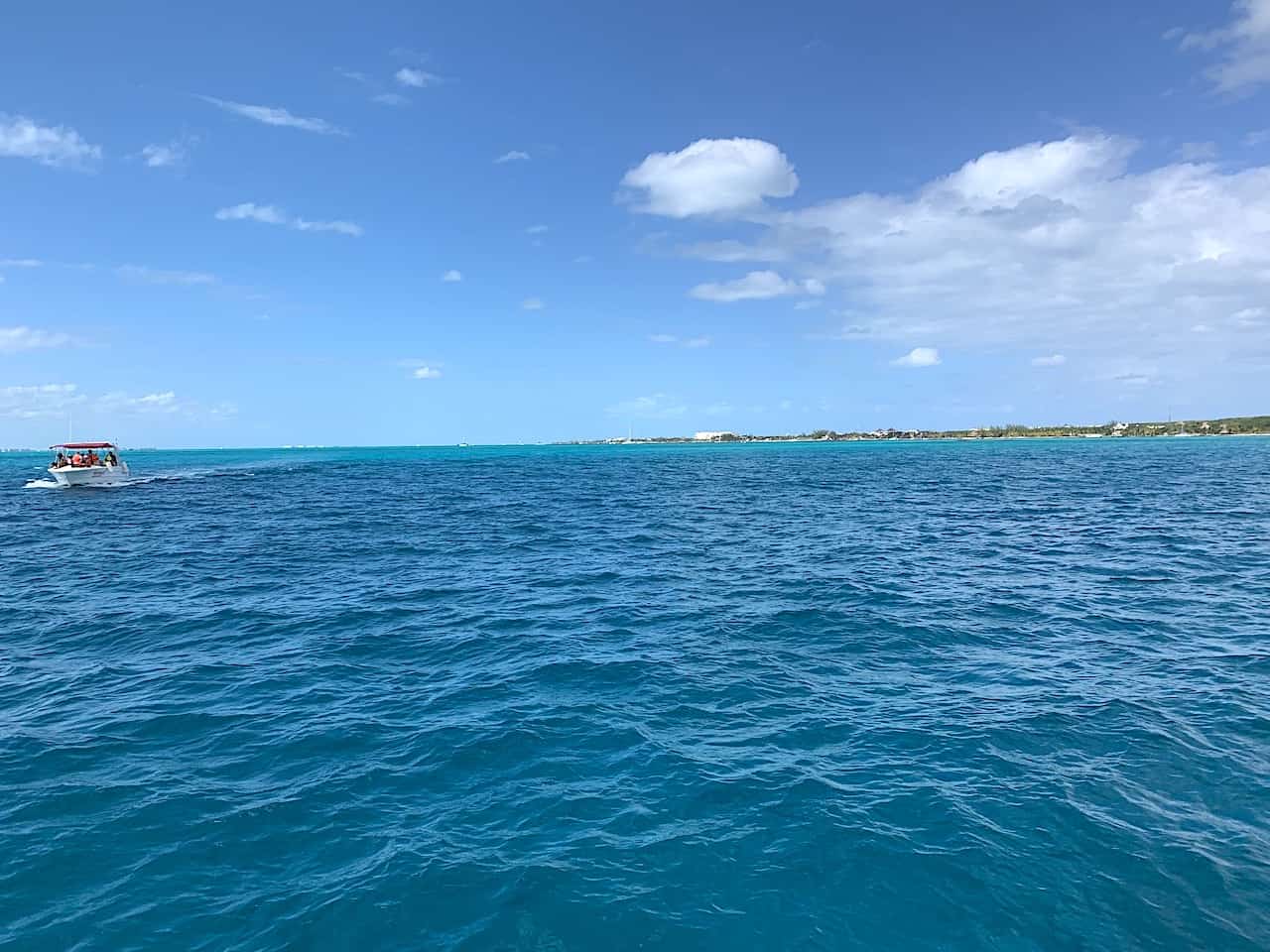
A good Loreto itinerary is less a list of sights than a rhythm: short sails, quiet anchorages, open days and a captain who reads the water. Set aside the myths about guaranteed whales and required experience, and what remains is a protected sea, a handful of islands and time to enjoy them. That is the version of the trip a well-run charter plans around, and it is easy to picture from the deck of a catamaran at anchor.